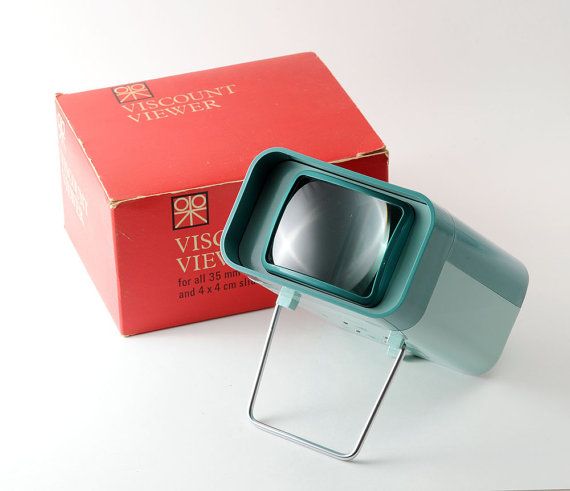
The Type IV Shell is based on the photography tool called a slide viewer. A photographic slide is transparent, and light from behind the slide provides brightness for the image.
A slide viewer consists of a lens and a light diffuser. The lens magnifies the image and the diffuser provides an even backlight. Often double lenses are used, and sometimes a mirror is used instead of a lens. Some viewers are powered and include an electric light bulb.
The appeal of the Type IV stems from its long design lifespan and its inherently intimate use by hands and eyes. Many models are portable. Powered viewers have unused battery compartments that can be removed to create interior space. Standard slide tray sizes match modern display dimensions, including thickness, so the lens is perfectly positioned to magnify the small display.
In visual terms, the optical lens adds curves and natural chromatic aberration, while colors and forms reflect contemporary styles. The entire 20th Century is represented by slide viewer designs.
Type IV Shells are categorized by their unique form factor and traditional use as slide viewers.
Class A – Automatic
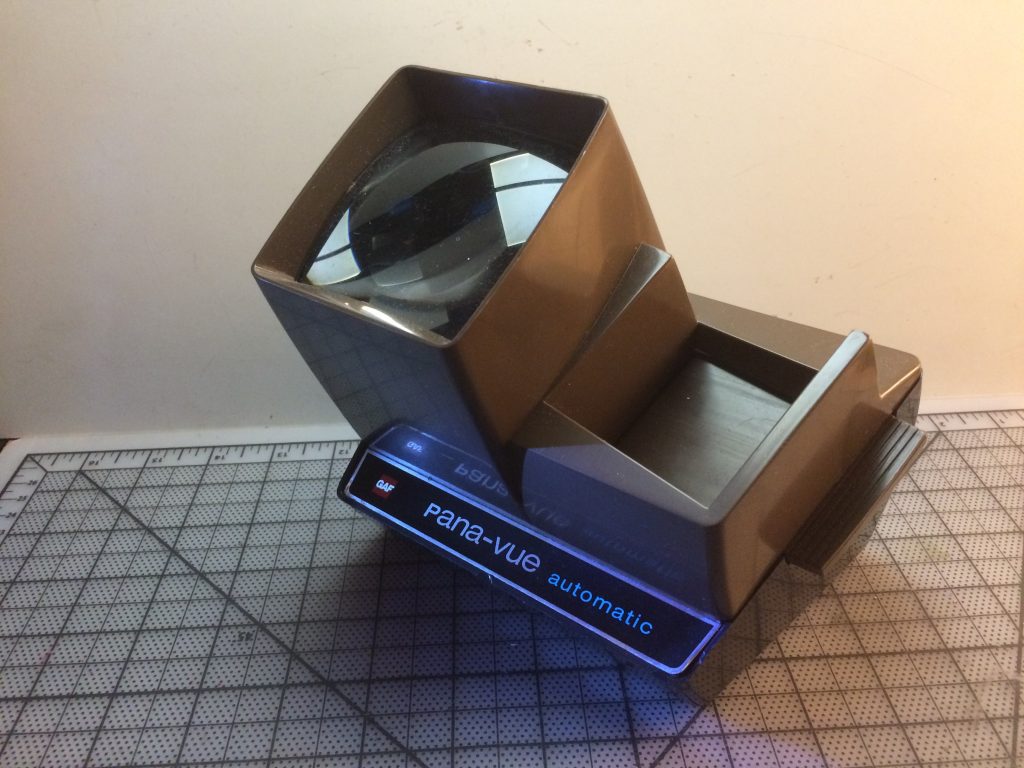
The Automatic class is the largest size and is intended for use on a table or desk. It is characterized by a receiver and hopper for slides in a stack.
A lever moves each new slide from the stack into view, pushing the current slide into the hopper.
Light is supplied by battery power, or from mains power through a transformer.
Class B – Palm
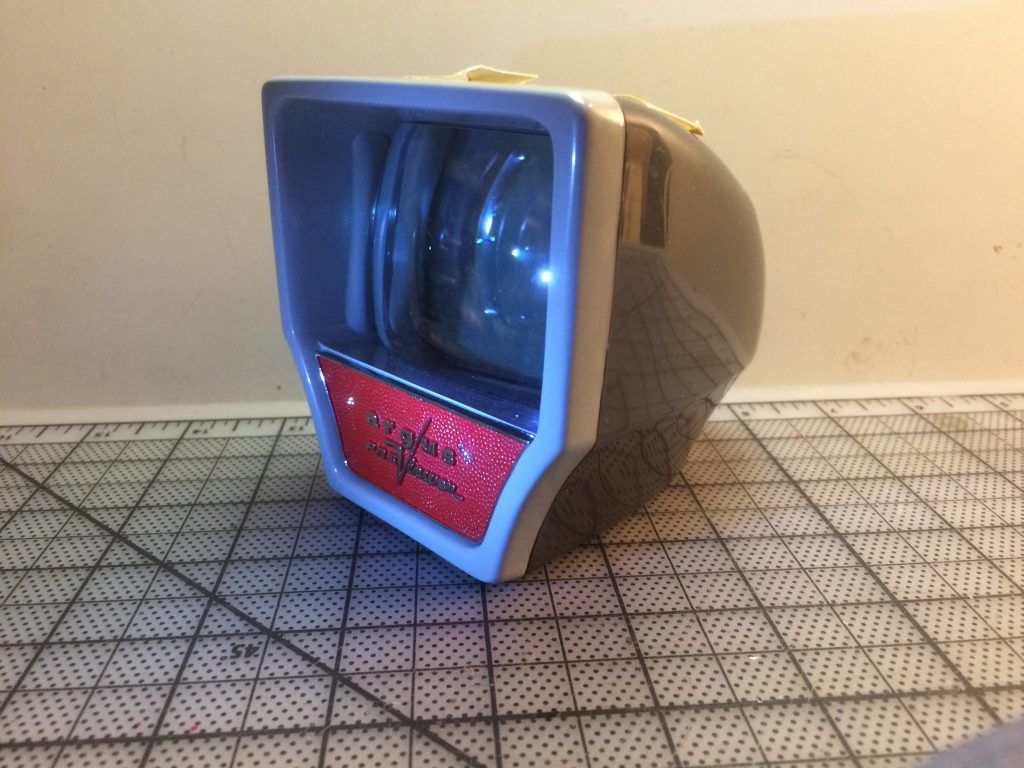
The Palm class is the smallest size and is characterized by its compactness. It is primarily designed to be held.
The receiver holds a single slide at a time, which is inserted and removed manually.
Light is ambient, or supplied by battery power.
Class C – Desk
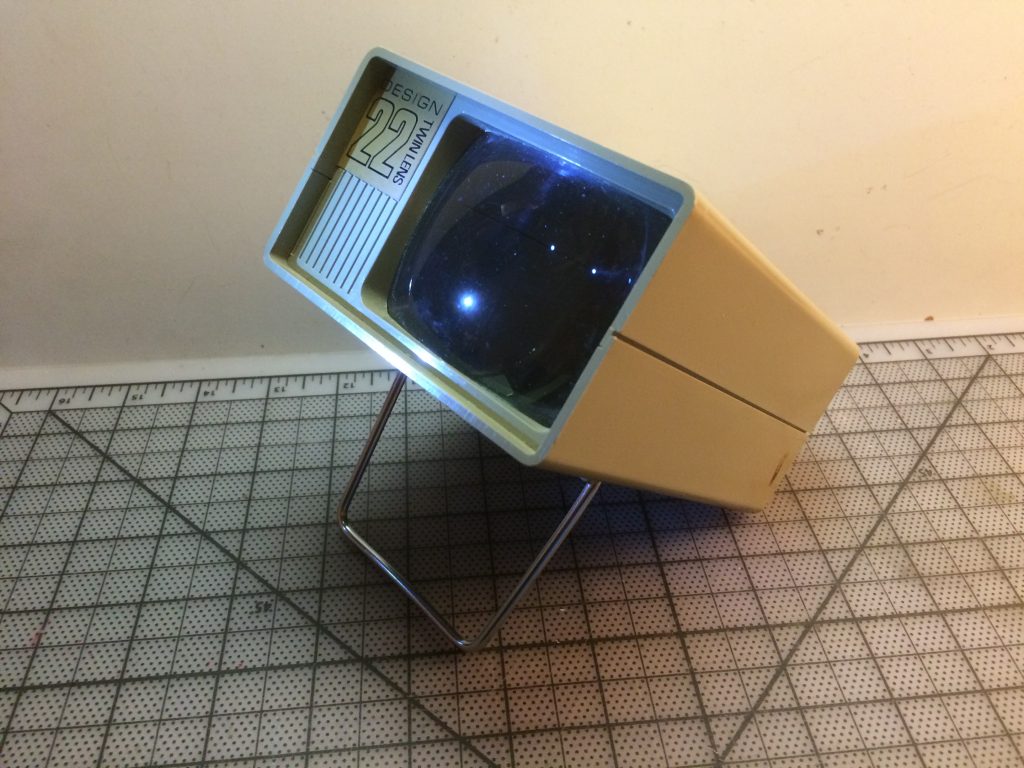
The Desk class is medium sized and is intended to be either held or set on a surface. It is characterized by its folding stand.
The receiver holds a single slide at a time, which is inserted and removed manually.
Light is supplied by battery power, or mains power through a transformer.